System Integration
Connect equipment, devices, software and data sources into one coordinated workflow.
APIs · protocols · gateways
We design connected controls, monitoring and workflow automation around unusual equipment, specialist processes and business rules that standard products cannot fully solve.
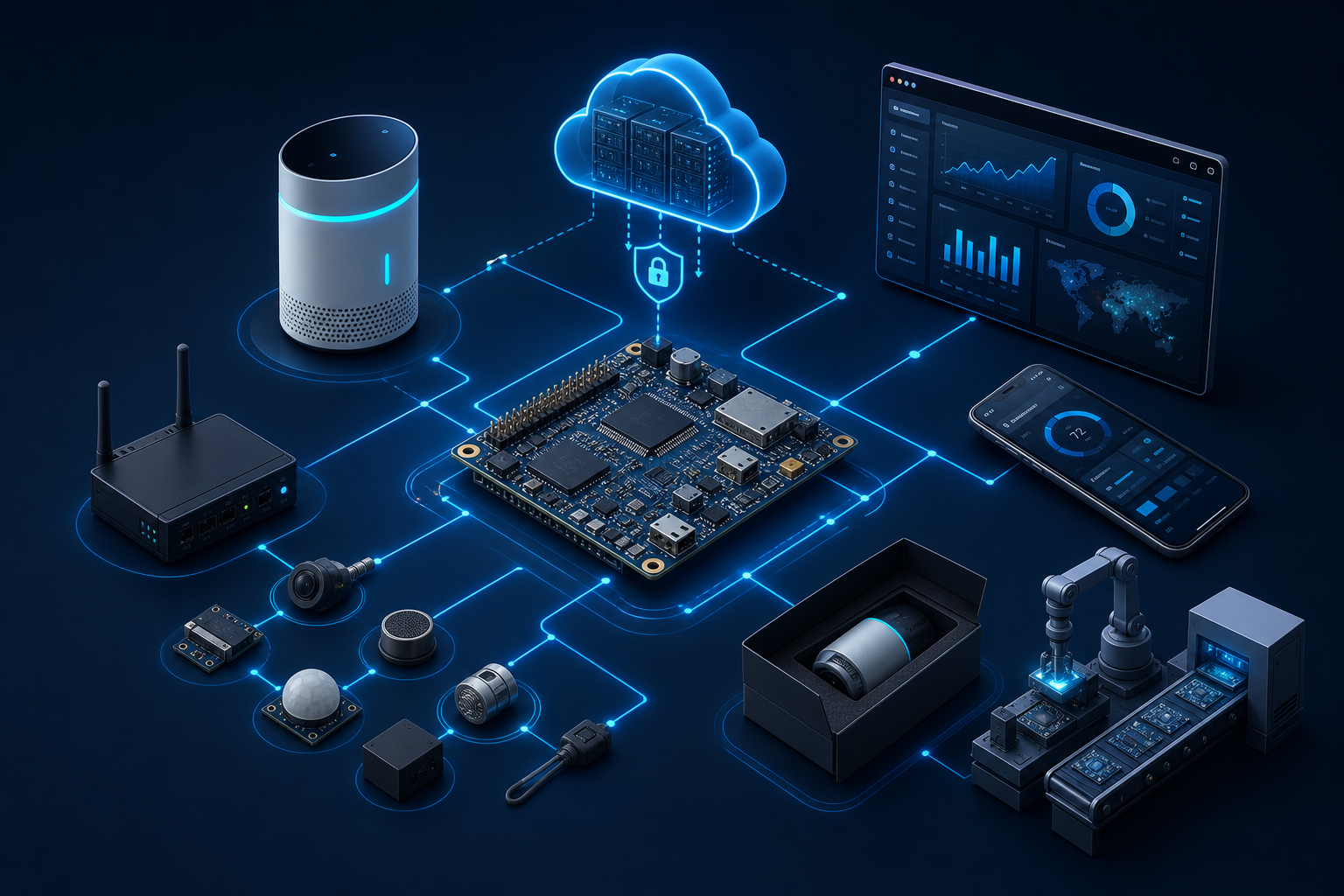
Custom automation is valuable when the real challenge sits between products, teams and systems. We map the complete workflow, then combine only the hardware and software needed to make it work reliably.
Connect equipment, devices, software and data sources into one coordinated workflow.
APIs · protocols · gatewaysPurpose-built sensing, control and interface hardware for unique operating needs.
Sensors · controllers · edgeRules, workflows and operator interfaces shaped around how your team actually works.
Logic · apps · dashboardsRemove repetitive handoffs, improve consistency and make exceptions easier to manage.
Triggers · actions · approvalsTurn selected signals into live status, alerts, history and decision-ready reporting.
Metrics · alerts · reportsDesign for permissions, offline behavior, recovery, documentation and maintainability.
Security · resilience · supportEvery solution is shaped around its operating environment, users, risks and available infrastructure.
Remote pump control, tank levels, irrigation schedules and environmental sensing.
Energy, access, environmental monitoring and centralized facility workflows.
Track asset states, automate handoffs and surface delay or exception signals.
Custom control, data capture, alerts and traceable operating sequences.
Automate repetitive checks, equipment status and distributed-site reporting.
Controls and alerts designed around accessibility, safety and independence.
The final architecture may be local, cloud-connected or hybrid depending on control criticality, network policy and operating needs.
Sensors, machines, forms and events
Local logic, controllers and gateways
Wired, wireless and API interfaces
Rules, storage and integrations
Apps, dashboards and alerts
Evidence, refinement and expansion
A custom system should create a measurable operating advantage. We define the baseline, expose useful signals and refine automation around real results.
Illustrative improvement curve. Actual outcomes depend on the process, baseline and adoption.
For a valuable problem that still needs a clear technical direction.
For validating critical behavior, interfaces and user value in realistic conditions.
For a defined solution ready for engineering, deployment and handover.
Users, workflow, constraints, evidence and target outcome.
Requirements, interfaces, risks and acceptance criteria.
Hardware, software, connectivity and operating model.
Test critical behavior in realistic conditions.
Build, integrate, validate, document and train.
Resolve issues, measure results and expand carefully.
Even rough information helps us understand the shape of the problem.
Discovery turns the problem into a decision-ready solution path.
Discovery compares the workflow against suitable existing products first. Custom engineering is recommended only where integration, behavior or operating constraints justify it.
Often yes. Feasibility depends on available signals, APIs, protocols, documentation, permissions and the condition of the existing system.
Yes. A focused prototype or pilot is often the best way to validate value and reduce uncertainty before wider implementation.
Local and hybrid designs are possible. The architecture is selected around operating needs, network policy and which functions must remain available offline.
Ownership, source access, licenses, third-party components and ongoing responsibilities are defined clearly in the project agreement.
Timing depends on scope, interfaces, prototype learning and deployment conditions. Discovery produces a staged plan instead of an unreliable early guess.
Share the process, equipment, current workaround and result you want. We will identify a practical first step and the questions worth proving early.